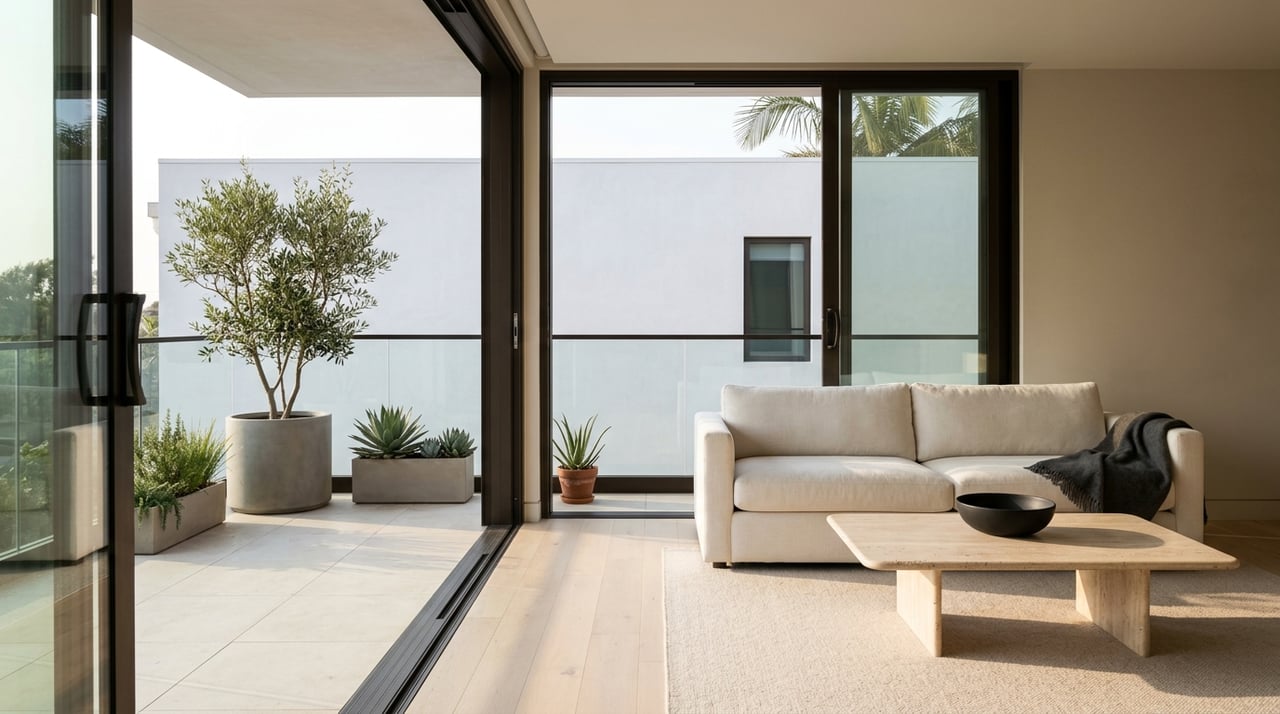
La Jolla Condos vs Homes: How to Choose the Best Fit
June 11, 2026
June 11, 2026
If you are deciding between a La Jolla condo and a single-family home, you are not just comparing floor plans. You are choosing how you want to live, what kind of upkeep you want to manage, and how much flexibility you may have over time. In a coastal market that is already about 99% built out, that choice matters even more because most buyers are selecting from existing homes rather than broad new construction options. Let’s dive in.
La Jolla is a distinctive coastal community on the western edge of San Diego, and the City describes it as roughly 5,718 acres and about 99% built out. That limited land supply shapes the market in a practical way. You are often weighing existing condos, detached homes, and infill opportunities instead of starting with a blank slate.
That built-out setting also helps explain the wide range in local pricing. In April 2026, Redfin reported a median sale price of $2,406,500 across all home types in La Jolla, with 127 homes sold and a median of 44 days on market. Current condo inventory showed 50 condos for sale at a median listing price of $1.4 million, while a broader snapshot of 31 new listings showed a median listing price of $3.15 million.
For many buyers, the real question is less about which option is "better" and more about which option fits your priorities. If you want simpler upkeep and close-in convenience, a condo may feel like the right match. If you want more privacy, outdoor space, and room to customize, a single-family home may make more sense.
A condo often appeals to buyers who want a more streamlined ownership experience. In many cases, exterior maintenance and common-area upkeep are handled through the homeowners association, which can reduce the number of property tasks you manage directly. That can be especially attractive if you want a second home, a lower-maintenance primary residence, or a home base near the coast and Village.
Under California Civil Code 4775, unless the governing documents say otherwise, the association is generally responsible for repairing, replacing, and maintaining the common area. The owner is generally responsible for the separate interest, and owners maintain exclusive-use common areas while the association repairs and replaces them. In plain terms, the details depend on the development’s documents, so it is important to review the CC&Rs carefully.
The California Department of Real Estate explains that CC&Rs set the rules for a common-interest development. These documents address key issues such as common-area definitions, assessments, insurance, and architectural control. Membership in the association is automatic when you buy into the development.
Condo dues do not eliminate maintenance costs. Instead, they typically shift some exterior and shared-property costs into a recurring HOA budget. That can make budgeting more predictable, but it also means you should understand what the dues support and whether future major repairs are being planned responsibly.
California requires reserve-study inspections at least every three years. These studies identify major components, estimate useful life and replacement costs, and set a reserve funding plan. The state also notes that reserve funding is intended to help cover future replacement of major items such as roofs and exterior paint.
For some condo buildings, there is another layer to review. Civil Code 5551 requires exterior elevated-element inspections every nine years for condominium projects with three or more attached multifamily dwelling units. That makes document review especially important if you are buying into an attached coastal building where deferred maintenance or upcoming repairs could affect your costs.
The Village area is generally defined around Prospect Street, Girard Avenue, and Torrey Pines Road. In a community like La Jolla, where proximity to the coast and core amenities can come with trade-offs, condos and smaller attached homes often appeal to buyers who want easier access to shops, dining, and shoreline amenities without taking on the full exterior workload of a detached property.
That does not mean every condo lifestyle feels the same. Some developments prioritize lock-and-leave simplicity, while others function more like full-time residences with substantial monthly dues and more involved governance. The key is to match the building and ownership structure to your daily habits, travel plans, and budget comfort.
A single-family home often appeals to buyers who want more privacy, more separation from neighbors, and more control over the property. You may have a yard, more storage, more parking, and a stronger sense of autonomy in how the home functions day to day. For many households, that extra space and control are worth the added maintenance.
That said, detached does not always mean simple ownership with no HOA. The California Department of Real Estate distinguishes between a standard subdivision, where one homeowner owns the lot and building with no common area, and a common-interest development, where owners share common areas or facilities. Some neighborhoods that look like detached-home communities still have HOA-owned roads, private amenities, or association rules.
The DRE also notes that a detached home can be legally structured as a condominium, sometimes called a detached condominium or site condominium. In those cases, you should not assume the ownership or maintenance obligations are the same as a traditional stand-alone house on its own lot. Before you buy, it is important to verify the legal form of ownership and read the governing documents.
With a detached home, you are typically taking on more of the upkeep yourself. Roofs, exterior paint, drainage, landscaping, and other property systems often become your responsibility unless association documents say otherwise. That creates more freedom, but it also creates more decisions, more vendors to manage, and more exposure to major repair timing.
For some buyers, that trade-off feels worthwhile because they want a yard, room for outdoor living, or a quieter setting away from denser parts of the community. For others, especially those downsizing or buying a part-time residence, the maintenance load may feel heavier than expected.
If you are considering a detached home because you hope to remodel, expand, or add an ADU later, you should look beyond the lot size. In La Jolla, coastal rules may affect what is possible. The City of San Diego states that a property in the Coastal Overlay Zone may require a Coastal Development Permit before a construction permit is issued.
The City’s ADU and JADU guidance adds that in the coastal zone, ADUs and JADUs can trigger Coastal Development Permit requirements when they are not fully contained within the existing primary structure or when they add habitable area. So if future flexibility is part of your plan, you will want to review the property’s coastal status, permit history, and any architectural restrictions before assuming an addition will be straightforward.
Parking is one of the most practical differences to consider in La Jolla. The City’s La Jolla Community Parking District planning includes evaluating off-street parking inventory, employee parking, residential parking programs, time-limit changes, paid parking, public parking facilities, and shuttle ideas. That tells you something important: parking is not a minor issue here.
If you want to spend a lot of time in the Village or near the shoreline, location can feel wonderfully convenient but less simple when it comes to vehicle storage and guest parking. A condo with secured parking may solve one problem while creating another, such as tighter guest access or HOA parking rules. A detached home may offer a driveway or garage, but perhaps at the cost of being farther from the core amenities you enjoy most.
La Jolla Shores adds another layer of context. The City notes there are public parking lots there, and it is the only beachfront boat launch within San Diego city limits. The City also states that overnight camping, sleeping, or parking is not allowed on the beach, cliffs, walkways, park areas, or adjacent parking lots.
When buyers feel stuck between condos and single-family homes, it often helps to focus on lifestyle before square footage. Start with how you want your home to support your routines, not just how it looks on paper. In La Jolla, convenience and control often sit on opposite sides of the same decision.
No matter which direction you are leaning, a few questions can help you compare options more clearly.
In La Jolla, choosing between a condo and a single-family home usually comes down to convenience versus control. Condos often reduce exterior upkeep and place more of the ownership framework inside the HOA system. Detached homes often give you more privacy and customization potential, but they also put more maintenance and permitting responsibility in your hands.
Because La Jolla is largely built out, every property type comes with trade-offs tied to location, parking, upkeep, and future flexibility. The right choice is the one that fits your budget, your routine, and your long-term plans with clear eyes.
If you want help comparing La Jolla condos and single-family homes in a way that matches your goals, lifecycle needs, and comfort level, Kathleen Westwood offers thoughtful, local guidance grounded in years of experience in coastal San Diego.


If you're looking for a partner who combines local expertise with a passion for helping people, please don't hesitate to reach out. I'm ready to assist you every step of the way.