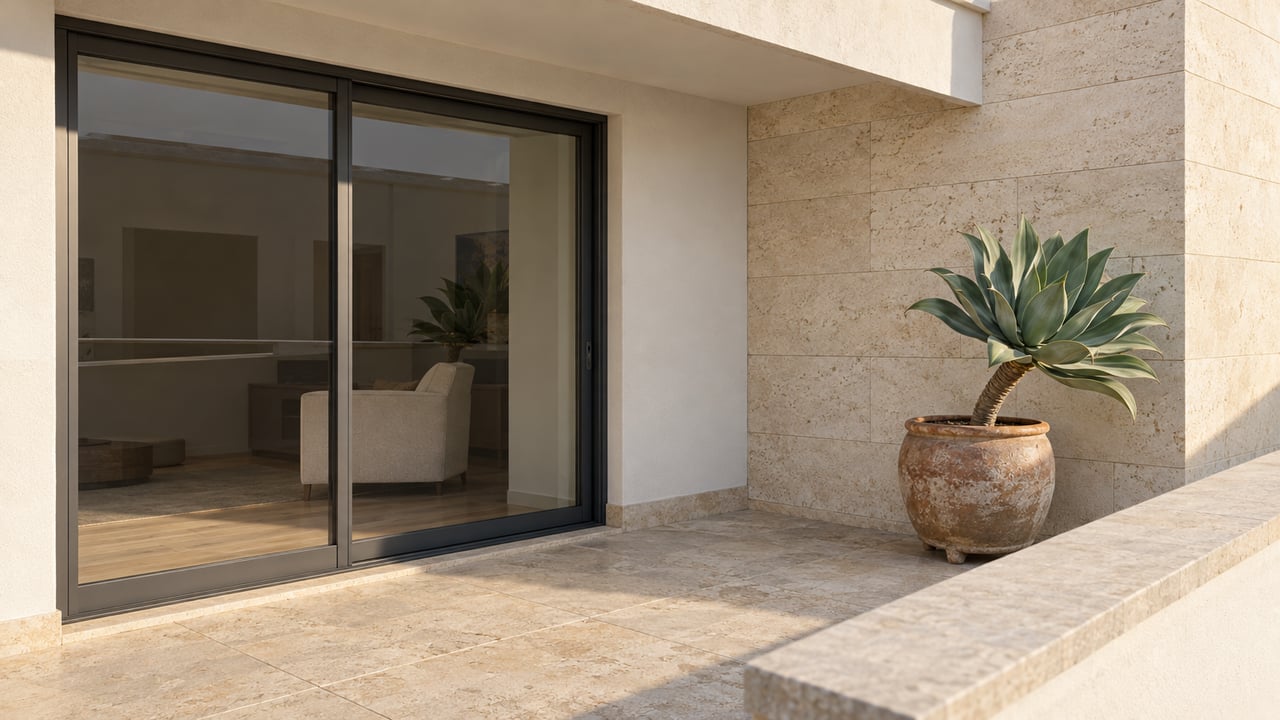
Selling a La Jolla Condo in 2026: Why the HOA's Balcony Report Now Travels With the Listing
October 22, 2026
October 22, 2026
Who reads a condominium association's balcony inspection report? Until this year the answer was mostly the board, its manager, and any owner curious enough to ask. Since January 1, 2026, in buildings the inspection law covers, the buyer is on that list too, by law. When the inspection was completed within three years of a conventional lender's project review, so is the buyer's lender. In La Jolla, condos are currently selling faster than houses. That makes the report one of the first documents to pull from the file when a unit is headed to market, whether the seller is a longtime owner moving on or a family member settling an estate.
California's Davis-Stirling Act has long required condominium associations to have their "exterior elevated elements" inspected. These are balconies, decks, stairs, walkways and railings. The rule comes from Civil Code Section 5551, which was created by 2019's SB 326. A licensed structural or civil engineer or an architect has to do the inspection at least every nine years. The first round was due January 1, 2025.
For most of the law's life, the report stayed with the association. SB 410 changed that. Governor Newsom signed it on October 10, 2025, and it took effect January 1, 2026. The bill made three changes that matter at the closing table:
Section 4525 says the documents go to the buyer "as soon as practicable" before title transfers or a real property sales contract is signed. The market was already moving this way. In February 2025, a columnist for the San Diego Union-Tribune wrote that condominium buyers and their Realtors were "starting to demand a copy of the EEE inspection report as a condition of the purchase," and expected that to spread. SB 410 turned that habit into a legal requirement.
The report is not a one-line certificate. Under Section 5551, the inspector has to identify the load-bearing components and waterproofing systems. The report must describe their current condition and estimate their remaining useful life, and it must recommend any repair or replacement needed. If an element poses an immediate threat to safety, the inspector must say so in the report and state how many units are affected. A copy goes to the association right away and to local code enforcement within 15 days, and the association has to restrict access to that element until repairs are approved.
SB 410 added more to the report itself. It now has to state the total number of units in the project and include a certification that the inspector evaluated a statistically significant sample of the exterior elevated elements.
Picture how a buyer reads it. They get a document listing every balcony component in the building, how many years each has left, and what repairs the engineer recommends. The words "remaining useful life" next to a short number will raise questions about future assessments, whether or not the board has scheduled any work.
Here the report stops being only a disclosure and starts affecting the loan. Most conventional condo loans have to meet Fannie Mae or Freddie Mac project standards. Fannie Mae's Selling Guide section on ineligible projects, dated August 5, 2026 in its heading, says that when a structural or mechanical inspection was completed within three years of the lender's project review, the lender must get the report and review it. The report cannot show critical repairs needed. If it shows critical repairs that haven't been addressed, the project is ineligible until the work is done and documented.
Fannie Mae's definition of critical repairs includes material deficiencies that could contribute to a critical element failing within a year, water intrusion and damaging leaks, advanced physical deterioration, and failure to pass a mandatory structural safety inspection. Among the items it lists for lenders to consider, balconies and waterproofing are named outright. The definition also covers unfunded repairs above $10,000 per unit that should be done within 12 months. Repairs paid for through a special assessment are excluded from that test.
That exclusion does not mean a special assessment ends the lender's questions. For each current or planned assessment, the lender must find out:
If the assessment pays for a critical repair that hasn't been completed, the project is ineligible. Fannie Mae also separates routine repairs, meaning preventive work or normal capital replacement paid from the operating budget or assessments within its guidelines, which do not count as critical. Freddie Mac's Guide Section 5701.3 has parallel rules on critical repairs and special assessments. Fannie Mae states that loans on units in a project that fails its requirements cannot be sold to Fannie Mae until the problem is resolved.
Put the two rules together and one report now goes to both readers who can stop a sale. The buyer receives it as a required disclosure. The underwriter reviews an inspection from the past three years as part of approving the building. The engineer's wording and the board's response, whether that is completed repairs, a funded plan or an approved assessment, now shape who can make an offer.
The Greater San Diego Association of Realtors' Local Market Update for 92037 covers September 2026, with data current as of October 5, 2026. It shows La Jolla's attached homes moving faster than its detached homes.
| La Jolla 92037, September 2026 | Attached | Detached |
|---|---|---|
| Closed sales | 21 | 16 |
| Days on market until sale | 33 | 45 |
| Percent of original list price received | 97.3% | 96.7% |
| Homes for sale | 79 | 93 |
| Months supply of inventory | 3.5 | 4.3 |
The September median for attached homes was $1,595,000, up 54.1% from September 2025. That jump comes from 21 sales, and SDAR's own footnote warns that small samples can make percent changes look extreme. The more reliable figures are the year-to-date attached median through September 2026 of $1,275,000, up 4.3%, and a rolling 12-month townhouse-condo median of $1,400,000.
When the typical attached sale takes 33 days and sellers are getting more than 97% of original list price, the advantage goes to listings that are ready to go. A balcony report that appears in the second week of escrow, with recommended repairs and no board response attached, can force a new round of lender review at exactly the point where time is shortest.
Section 5551 covers only elements the association is responsible for maintaining. They have to be more than six feet above ground, designed for people to walk or stand on, and supported substantially by wood-based products. The building has to have at least three attached multifamily units. So whether a given La Jolla building is covered depends on how it was built and on what its governing documents say.
The governing documents can change the answer. The Union-Tribune reported that some associations whose only covered elements are balconies were amending their CC&Rs to move balcony responsibility to individual owners. Others were going beyond the minimum inspection and doing widespread repairs. The same piece debunked a "persistent and completely false rumor" that HOAs got a one-year extension to 2026. The extension, AB 2579, applied to apartment buildings under SB 721 and expressly excluded common interest developments.
That gives a seller three possible situations. The building may have a report, it may fall outside the statute, or responsibility for the balcony may have shifted to the owner. A buyer and an underwriter will treat each one differently.
Families settling a trust or estate often find condo documents spread across years of association mailings. SB 410 helps here. Because the inspector's report is now an association record kept for two inspection cycles, an owner, or a representative the owner designates, can ask the association for it. Reading it before the unit is listed, together with the association's statement of current regular and special assessments, gives the seller the same picture a buyer and a lender will get later.
This post is general information, not legal, tax or financial advice. Please confirm your own disclosure duties and financing questions with your attorney, your lender or your association's manager.
Our building is older. Does that alone put a unit at risk with lenders? Fannie Mae's standard turns on condition and funding, not age. Routine repairs paid from the normal budget or through assessments within its guidelines are not critical. Critical repairs that haven't been addressed make a project ineligible until the work is documented.
What if the association has not completed its inspection? The Union-Tribune reported that the January 1, 2025 deadline was not extended for HOAs and that many associations had not complied. SB 410's disclosure requirement refers to the most recent report, so what the seller can hand over depends on what the association has. An attorney is the right person to advise on how to handle a missing report.
Is a special assessment on the books a problem for buyers using a loan? It depends on what the assessment pays for. Lenders review its purpose, approval status, amounts and expected payoff date. An assessment for a critical repair that hasn't been completed makes the project ineligible.
If you are preparing a La Jolla condo for sale, whether it's your own home or one you are handling for family, Kathleen Westwood can help you gather the association's inspection report and assessment records before listing, so you know what buyers and their lenders will see. Request a confidential consultation and home valuation.



If you're looking for a partner who combines local expertise with a passion for helping people, please don't hesitate to reach out. I'm ready to assist you every step of the way.