In Clairemont, The Market Is Fast. The Sewer Scope Isn't.
August 20, 2026
August 20, 2026
Homes in West Clairemont were selling in about fifteen days this spring. Earlier in the year, homes in Clairemont Mesa East were taking closer to a month. That gap alone tells you something about how this neighborhood actually trades, but it's not the number that surprises sellers most. The surprise shows up later, after the offer is accepted, when the inspector runs a camera down the sewer lateral and the report comes back with a word most people haven't heard since a home inspection class: galvanized.
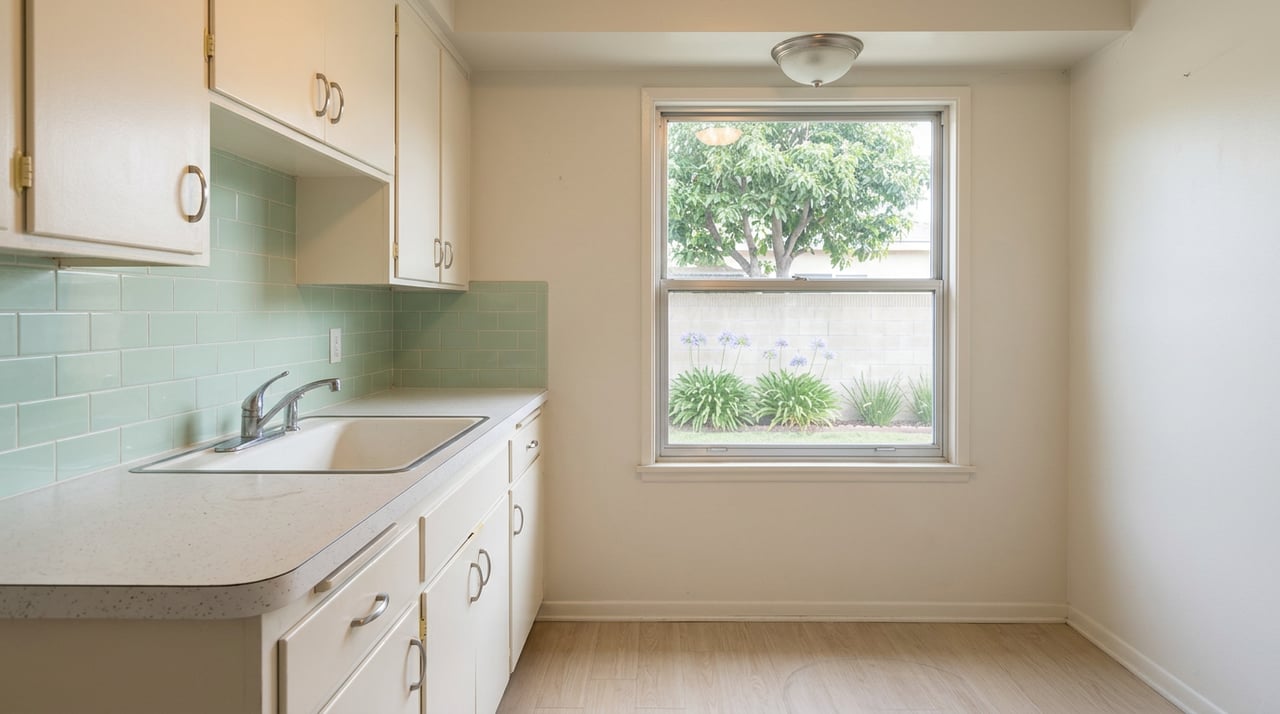
Clairemont was built almost all at once. Developers Lou Burgener and Carlos Tavares laid out the mesa starting in 1950, on land that had been Camp Kearny during the First World War, and named the new community after Tavares's wife, Claire. That single-decade build-out is why Clairemont feels so consistent block to block, ranch after ranch on 6,000 to 8,000 square foot lots. It's also why so many of those homes share the exact same plumbing problem at the exact same time. A neighborhood built in a rush ages in a rush too.
The headline story in Clairemont this year has been speed and tight supply. Across the three zip codes that cover the community, detached inventory has stayed lean and well-priced listings have kept moving, even as prices have softened slightly from last year's peak.
| Sub-area | Recent median (detached) | Typical days on market |
|---|---|---|
| 92117 (North & West Clairemont, Bay Ho) | around $1.095M, three months ending May 2026, down about 2.9% year over year | 15 to 17 days |
| 92111 (Clairemont Mesa East) | $862K as of January 2026, down 11.7% year over year | 33 days |
| 92110 (Bay Park & Morena) | ridge-view detached homes often above $1.2M, overall zip median pulled to roughly $830K by property mix | 30 to 45 days |
By late July, a broader pull of active Clairemont listings put the median list price at $1,047,500 with an average of 35 days on market and roughly $782 per square foot, a snapshot that lines up with the spring data even as the busiest part of the season cools slightly. None of that reads like a market with a problem. It reads like a market where sellers still have real leverage.
Leverage doesn't mean immunity. It means the seller who handles the plumbing question before it becomes a buyer's question is the one who keeps that leverage all the way to closing.
Here's the part that makes Clairemont different from a neighborhood with a mixed building history. Because the housing stock arrived in one wave between roughly 1950 and 1965, the plumbing arrived in one wave too. Most of these homes were built with galvanized steel supply lines and cast-iron or clay sewer laterals, materials that were standard for the era and have now been in the ground for sixty to seventy-five years.
Galvanized pipe corrodes from the inside out. It doesn't fail all at once, it narrows over decades until pressure drops and water starts running rust-colored, and San Diego's imported water makes that process move faster here than in places with softer supply. Clairemont's water measures somewhere in the range of 16 to 22 grains per gallon, hard enough that scale builds inside an already-narrowing pipe. Cast-iron and clay laterals have their own failure pattern: they crack, they shift, and tree roots find the seams.
None of this is unique to any one address. It's the plumbing profile of the whole neighborhood, which is exactly why it surfaces in so many transactions rather than a scattered few.
Clairemont has spent the past year as one of the most active ADU-permitting communities in San Diego, and that activity is doing something sellers don't always expect. Adding a unit means adding fixtures, which means the city looks harder at whether the existing sewer lateral and water service can actually handle the new load. A permit that used to sail through now sometimes stalls on a capacity question, and that question often gets answered by the same camera scope a buyer's inspector would run anyway.
The practical effect is that more Clairemont homeowners are learning the condition of their own lateral for the first time, not because they were selling, but because they were building. Word travels on a block where every third house seems to have a permit sign out front. By the time a home hits the market, a buyer's agent has often already heard that the street has old pipe, and the inspection becomes less of a discovery and more of a confirmation.
A sewer-lateral inspection is a straightforward process. A plumber threads a small camera through the cleanout and records the full run from the house to the city main, and San Diego County is clear about where responsibility sits once a problem is found: if the lateral breaks or cracks, the repair is the property owner's responsibility, and any portion of that work happening under a public street requires an excavation permit from the county.
What the footage tends to show in a Clairemont home built in the 1950s or early 1960s is some combination of scale buildup in the supply lines, root intrusion at cast-iron or clay joints, and in the more worn cases, a section that has partially collapsed. None of this is unusual for a home this age. What varies enormously is whether the seller learns about it months before listing, while there's still time to plan, or during an active escrow, when every day of delay costs leverage.
A collapsed lateral or a badly corroded supply line found mid-escrow rarely kills a deal in a market this tight, but it does something almost as costly: it resets the negotiation. A buyer who was competing against multiple offers a week ago suddenly has real information the other bidders didn't have, and a credible repair estimate becomes leverage in the other direction. Trenchless repair methods, which avoid tearing up a yard or a driveway, can resolve a lateral issue without a full excavation, but the estimate still has to be negotiated, and negotiating from inside an accepted contract is a much weaker position than negotiating before the home is listed.
In a market where the best Clairemont listings are still moving in two to three weeks, a mid-escrow plumbing surprise is one of the few things that can turn a clean, fast sale into a renegotiated, slower one.
The fix is not complicated. A pre-listing sewer-lateral camera scope, run by a licensed plumber before the home ever goes on the market, tells a seller exactly what a buyer's inspector will eventually find, with enough runway to address it on the seller's terms rather than the buyer's. If the footage is clean, that report becomes a selling point, proof to a buyer's agent that the one thing every Clairemont buyer worries about has already been checked. If it isn't clean, a seller has time to get bids, choose a trenchless option where it applies, and either complete the repair or price the disclosure into the listing from day one.
This is exactly the kind of preparation Compass Concierge was built to fund, covering the cost of the work up front so a seller isn't choosing between an out-of-pocket repair bill and a lower offer. Pairing that with the neighborhood-specific knowledge of what a Clairemont home's plumbing actually looks like at this age is the difference between a listing that sails through escrow and one that stalls on a surprise nobody priced in.
Does every Clairemont home have this problem? Not every home, but the odds are high in anything built during the original 1950 to 1965 wave that hasn't already been repiped or relined. Homes that have gone through a full renovation, particularly one that touched the slab, are often the exception.
Is a sewer scope required to sell? It isn't required by law, but in a neighborhood where buyers increasingly expect one, skipping it just moves the discovery to the buyer's side of the table instead of the seller's.
Does this affect condos and townhomes the same way? Less so. Attached properties in Clairemont are a smaller, thinner market, and shared plumbing systems are typically an HOA responsibility rather than an individual owner's, though it's still worth confirming what the association has budgeted for infrastructure work.
If you're weighing when to list a Clairemont home, or you want a straight read on what a pre-listing inspection would likely find on your specific block, Kathleen Westwood offers a confidential consultation and home valuation built around exactly this kind of neighborhood-specific detail.



If you're looking for a partner who combines local expertise with a passion for helping people, please don't hesitate to reach out. I'm ready to assist you every step of the way.